Showing posts with label Sex and Sin. Show all posts

Monday, February 12, 2018

The New Pro-Life Movement and Its Critics

Since its inception in 2016, the New Pro-Life Movement has drawn criticism from conservative Catholic writers, not least because the NPLM began with the rejection of the old guard’s unhealthy attachment to conservative/Republican politics. The most recent attack, coming from the Charismatic Episcopal Church’s CEC for Life blog, had some me-too reprinting from Life Site News and Church Militant just as Crux Now published an interview with M.T. Dávila, an NPLM member and associate professor of Christian ethics at Andover Newton Theological Seminary. While some of CEC for Life’s criticisms are worth considering, more of them show why the old movement needs in-house censure.

Semantics Matter

Let’s begin with what the CEC for Life article gets right:

Under the NPLM’s “Women’s Rights and Justice” section of its 11 Pillars, the first paragraph begins, “Since women are the central figures in the abortion debate ….” Women are at the center, sure; they’re certainly not irrelevant to the debate. But neither are the unborn, who are also at the center of the debate. This particular phrasing simply begs to be misunderstood as saying the unborn and their right to life are of secondary consideration. The effect of legal abortion rights on fathers also gets no attention, enhancing this error.

Semantics matter. Murphy’s Law for Writers holds that “whatever can be misunderstood will be misunderstood, usually in the worst way possible.” Granting that opponents will deliberately misrepresent your position, you still write to be understood by those who rely on your words as you state them. Unlike a person in a casual conversation, the writer can’t afford to metaphorically let words just fall out of their mouths under the assumption, “Oh, they’ll know what I mean.” A political manifesto is the last place to be careless in your phrasing.

I’m well aware that no one in the NPLM sets a lower value on the unborn’s life than they do on the mother’s. But I’m not the one that has to be convinced.

Also, CEC for Life points out that, whatever the national leaders of the old movement do, there are more and more localized efforts to address the “demand” side of the abortion equation. “Ultimately, ... [the NPLM] fails to acknowledge a long-standing history of compassion and hard labor made evident through the hundreds and thousands of resources now available for mothers and fathers and their preborn child. Not to mention counseling and services available to abortion workers looking for healing and a new life.” The NPLM would do well to acknowledge these contributions and limit its criticism to the national leadership.

Wednesday, February 1, 2017

The Chittister Challenge 2: Supply, Demand, and the “Culture of Life”

On Saturday, January 28, Joe Heschmeyer published an essay, “Seven Answers to the ‘Pro-Lifers are just Pro-Birth’ Argument,” in his blog Shameless Popery. The essay offers rebuttals to a meme featuring the quote from Sr. Joan Chittister, OSB, that I wrote of a couple of years ago. I have a lot of respect and admiration for Joe, who is a student at the Pontifical American College in Vatican City (and, I believe, should be coming up on his transitional diaconate this year). I earnestly commend the essay to your attention; it’s very well balanced in its treatment of the argument.

Supply and Demand

However, Joe’s essay did prompt me to do a little more drilling on the subject, to embrace a little more of the political context in which the argument arises. The recent elections brought to the surface a long-standing tension between two different camps within the pro-life movement, camps which I will for brevity’s sake call the supply-side and demand-side branches. While the meme Joe dissects arose in a pro-abortion context, the quote has also had currency among demand-side pro-lifers.

The supply-side pro-life camp, which we could also call the first-wave movement, is mostly concerned with the legality of abortion and euthanasia, along with some related issues such as assisted suicide, cloning, IVF, and contraception. Politically, they tend to be older and more conservative or right-wing libertarian. As Joe rightly points out, conservatives are more likely to donate time and money to support charitable causes than are liberals, so it’s not like they’re stingy. However, precisely because their politics are more conservative, their view of the scope of “pro-life” is, for want of a more charitable word, narrower. They highly resist the importation of other issues, such as Syrian refugees or undocumented immigrants, into the pro-life purview and refuse the creation of government intervention programs. Because their concern is mostly with the legal and political mechanisms permitting the “death industry” to exist, one can say they seek to shut off the supply.

By contrast, the demand-side camp or second-wave movement tends to be younger, as well as more moderate to liberal in their politics though less willing to affiliate with either party or identify with either ideology. The demand-siders recognize that economic and social issues often drive the choice for death; by addressing those issues, they seek to reduce the demand. For this reason, they’re more likely to support government intervention and more willing to pay the taxes required to support the efforts. The pro-life movement as a whole is concerned with what Vice-President Mike Pence called “[society’s] most vulnerable, the aged, the infirm, the disabled, and the unborn.” The second-wave movement, influenced by the consistent life ethic articulated most notably by Cdl. Joseph Bernardin and in St. John Paul II’s Evangelium Vitae, extends its recognition of vulnerability to immigrants, refugees, the homeless, and other socially marginalized people.[*]

Saturday, April 16, 2016

Timothy Egan and the Reverent Subject of Sex

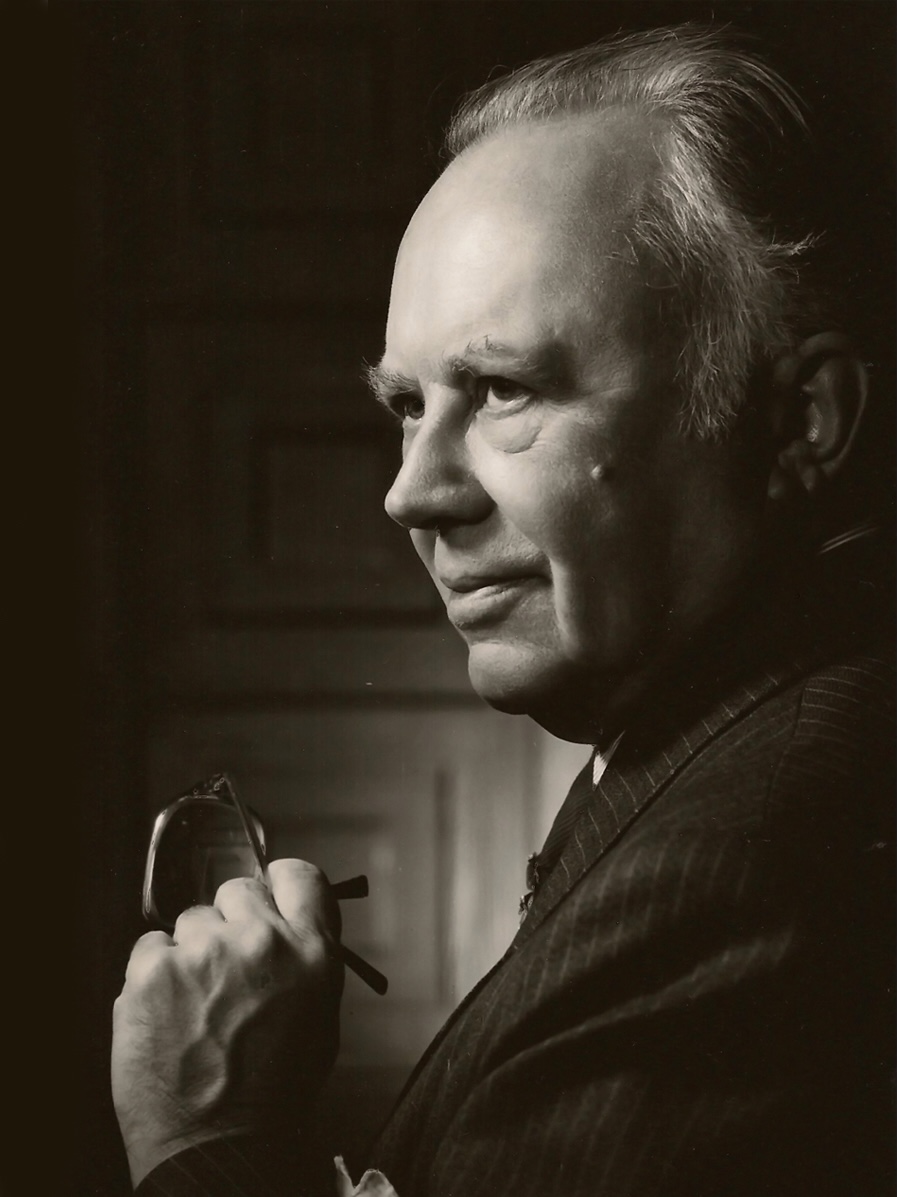
Timothy Egan. (Photo: Barry Wong.)
The last few days, I’ve been focused on the hyperventilating by Catholic radical traditionalists over Amoris Laetitia, Pope Francis’ overlong summation of the work of the last two Synods on the Family. The reactions from the left were, for the most part, entirely predictable — some despaired because it didn’t go as far as they thought it should, while others rejoiced because they thought it went farther than it did. Of the latter category, we have Timothy Egan of the New York Times, who penned what Phil Lawler has called “surely ... the dumbest column published on the topic.”

“Sex was Dirty”

Egan, Lawler states, “rolls out the stale complaints of the 1970s about the Bad Old Church, opening and closing his column with citations from the late comedian George Carlin. The reader will look in vain for references to any other authority. Nor is there evidence that Egan has paid attention to Catholic writers who have reflected on the Church’s approach to human sexuality more recently, and just maybe more profoundly, than Carlin—such as, just for example, St. John Paul II.”

Actually, Egan does worse than go without authoritative references: he cites the Baltimore Catechism in such a way that it appears to support the tropes.

Sex was dirty. Sex was shameful. Sex was unnatural. Thinking about it was wrong. Premeditation itself was a sin, and so was flirting. Sex had one purpose: procreation, the joyless act of breeding. “The sixth commandment forbids all impurity and immodesty in words, looks and actions,” was admonition No. 256 in the Baltimore Catechism, the standard text used to teach the faith from 1885 to the late 1960s.
No. 256 [sic; the actual answer number is 257] also warned about the dangers of “sinful curiosity, bad companions, drinking, immodest dress and indecent books, plays and motion pictures.” If that sounds now like the dynamics of a good dinner party, you can also see this pope joining the fun at the table.

In my post on Amoris Laetitia, I spoke of the distinction the Church makes between the doctoral (“What do we teach?”) and the pastoral (“How do we integrate this teaching into parish life?”). The same kind of distinction ought to be observed between doctrine and indoctrination: religious formation, also known as catechesis. What the Catholic Church teaches is one thing; what Tim Egan and George Carlin “learned”, however, is another thing entirely, and may not be entirely their fault for not paying attention in class.

Friday, March 25, 2016

Michael Lind’s Lifeless Conservativism

Russell Kirk (via Wikimedia).
That the Republican Party must reform or become irrelevant is increasingly obvious to most people. The hardest fact to deal with is that the voter base has shifted leftward over the last thirty-six years; the attitudes, values, and beliefs that appealed to many boomers doesn’t appeal as much to Gen-Xers and even less to millennials. If the GOP is to remain the American analogue to Britain’s Conservative Party, it follows that conservatives themselves must define what it means to be conservative in the 21st century.

Conservativism vs. Utopianism

“Can the American right free itself from the utopianism of the post-Reagan era?” asks Michael Lind in The National Interest.

The question would have seemed strange to mid-century American conservative thinkers like Peter Viereck, Russell Kirk and Robert Nisbet. In their view, conservatism was anti-utopian by definition. In different ways, they identified “conservatism” with a suspicion of radical schemes to revolutionize America and the world.
But today’s orthodox conservatism consists almost entirely of radical utopian schemes to revolutionize America and the world. So-called “movement conservatism” or “fusionism” in its present form is, in fact, an alliance of three distinct utopian movements in economics, domestic policy and foreign policy. All three crusades are doomed to fail in the real world.

A modern realist, I find, is very often one who, having despaired of the real world ever meeting the standards of his ideals, goes on to conclude that we should have no ideals. Lind, a modern realist, therefore plunks for a bare-bones conservativism, one that seeks merely to preserve the status quo rather than strive for a better nation.

Unfortunately, Lind doesn’t tell us why the status quo is to be preserved, or why change is unnecessary. He merely defines three particular efforts as “utopian” and derides any attempt to achieve them through politics as “madness”.

Saturday, March 12, 2016

God, Galileo, and the Transgendered

On February 27, Melinda Selmys, a self-described “queer convert to Catholicism”, wrote a post for her blog on Patheos titled, “Does God Make Mistakes? (And are Trans People One of Them?)” There are two ways, Selmys asserts, that trans identities could be “real and valid” without using a fallible God as an explanation. The first is the fallen nature of man; the second is that the binary model of sexuality is too simplistic.

Here Comes Galileo (Again!?)

I have a lot of respect for Selmys. C. S. Lewis said once that he didn’t talk about homosexuality as a rule because it wasn’t a problem in his life; he wouldn’t tell someone how to fight a battle he’d never fought. Likewise, never having thought of myself as anything but a male, I’m in no position to tell people with gender-identity disorder how to overcome it, nor can I fault them if they fail. In fact, as I understand it, GID is an almost intractable problem; even sexual-reassignment surgery is unreliable as a palliative. (See my post in The Impractical Catholic on sex changes.)

As I say, I respect Selmys, and don’t wish to impugn her fidelity to the Church. However, in defending her second postulate, instead of stepping through the common arguments in support of Church teaching and calling them into question, she drags Galileo into the argument to serve once more as the sine qua non of magisterial error. Poor, abused Galileo! Never simply allowed to rest vindicated, his shade must be constantly conjured up to bolster weak arguments: “Well, the Church has been wrong before. Just look at Galileo!”

Why, O why does Selmys, who is capable of so much better, reach for such a hackneyed and intellectually lazy comparison? Well, because apparently the Church hasn’t formally instituted the “binary model” as dogma:

How does this relate to the transgender question? Well, today we know that various bodies with lower levels of authority (lower, in many cases than the Inquisition of 1616) have condemned transgender identities. We know that Popes have offered indirect criticism (though Christmas greetings and Papal homilies are not official dogmatic pronouncements any more than airplane interviews are.) We know that the weight of theological tradition falls on the side of a strict male-female binary, and we know that Genesis 1:27 and Matthew 19:4 are traditionally interpreted as excluding legitimate variation from this scheme.
We also know that nothing about transgender or intersex conditions has been promulgated at a level of authority that meets Vatican I’s criteria for infallibility. This means that there remains open the possibility of developments in doctrine that will reveal a space within the order of creation for those who do not fit neatly into binary categories [bold type mine.—ASL]. The basic teaching — that we are created male and female in the image and likeness of God — could be compatible with the idea that there is some admixture of both the male and the female in certain individuals (an idea which, in fact, has roots in some ancient Jewish interpretive traditions.)

Wednesday, July 22, 2015

Progressive fundamentalism and gay wedding cakes

On July 17 on the Patheos blog Unfundamentalist Christians, a blog dedicated to repackaging Christianity for greater feminist and LGBT friendliness, guest contributor April Kelsey’s bio proclaims her goal to be “to put the final nail in fundamentalist Christianity”. Well, everyone should have a goal in life, although it’s far more probable that progressive Christians like Kelsey will cease to be Christians even in name long before fundamentalist Christians cease to be fundamentalist.

However, Kelsey is unaware that she, too, is a fundamentalist, albeit one who skews her reading of the Bible leftward rather than to the right. Indeed, the last line of her post “Your ‘Deeply-Held Belief’ Isn’t Biblical” — “… [I]f it isn’t in the Bible, I don’t have to believe it” — is the most common expression of one of the “two pillars” of Christian fundamentalism: sola scriptura, “only Scripture”.[*] I too would like to see the end of Christian fundamentalism, because I’d like to see the end of Christian disunity, which sola scriptura helps to propagate.

Now, if you want to stop being a fundamentalist, you have to reject sola scriptura (and there are many reasons you should do so). There are really only three ways to accomplish this. One is to stop being Christian altogether. The second is to regard the Bible as fallible and make Christ your ideological sock puppet, like Jimmy Carter. The third is to become Catholic, or at least Eastern Orthodox, and let the apostolic tradition guide your understanding of Scripture. Whichever way you do it, you can’t say, “I only believe what I read in the Bible,” and still pretend you’re not a fundamentalist. Fundamentalist does not equal politically conservative.

Wednesday, July 1, 2015

The end of the American experiment

I had to take my time with my reaction to the Supreme Court’s decision in Obergefell v. Hodges (576 US __ [2015]), because there were some comments and criticisms that led me to suspect it was worse than I thought it would be. The suspicion was confirmed.

As expected, Associate Justice Anthony Kennedy authored the decision, which is the latest in the logical progression from Lawrence v. Texas (539 US 558 [2002]) through United States v. Windsor (570 US __ [2013]), the majority opinions of which Kennedy also wrote. Also as expected, Kennedy premissed his opinion on the dubious concept of “substantive due process”, the pre-eminent rationale for judicial legislation, and invoked the “equal protection” clause without bothering to explain — as, indeed, none of his decisions explain — how homosexuals qualify as a “protected class”. (Sorry, neither “Well, duh!” nor “Because I said” is a valid legal argument.)

In its way, Obergefell was an even greater assertion of SCOTUS power than was Windsor. As I explained at the time, Kennedy justified striking down the Defense of Marriage Act (DOMA) by arguing that the right to define marriage lay with the States, not explaining how the State’s authority to confer State benefits could rob the Federal government of its authority to decide who gets Federal benefits. Now, however, the States can exercise their authority only until the Court develops a “better informed understanding” (slip opinion at 19), at which time it can impose a school solution on everyone.

For Alexis de Tocqueville, the great French commentator on early America, the great danger of democracy was “tyranny of the majority”; i.e., the insufficiency of institutions to protect individual rights. The problem for the last few decades has been exactly the opposite — aristocracy, the rise of a self-selected élite willing to frustrate the democratic process, distort the plain meaning of the Constitution, and violate long-standing political rights in order to impose its superior mores. Obergefell signals the triumph of that élite and the functional advent of limited self-government.

Tuesday, January 20, 2015

Pope Francis, Humanae Vitae, and Margery Eagen’s devastating fallacies—UPDATED ALREADY?

Filipinos at Pope Francis’ Mass in Manila, Jan. 18.
(Photo: AFP/Ted Aljibe.)
You would think that a writer billed as a “spirituality columnist” for a website that professes to cover “all things Catholic” would have some familiarity with Catholic teaching, especially the most controversial doctrines. However, Margery Eagen, writing for Crux, talks about Pope Francis’ recent speech at the Mall of Asia as though her only knowledge of Catholicism came from Planned Parenthood.

Although he has not lived it himself, I had thought [Pope Francis] understood something about good people living real lives in real marriages. I had thought he even understood something about the beauty of sex in marriage, the need for sex in marriage.

I was wrong.

In the United States, his words will have little practical impact. Most Catholic women have used birth control for decades. There are no more families with 12 and 14 kids in the Sunday morning pews. But his words do reveal a heartbreakingly backward perspective: that the highest calling of married women is sacrificing all to rear children, as many as come along, no matter those women’s talents or skills or dreams.

These aren’t the words of a person who’s well-educated in Catholic doctrine, let alone someone who should be discussing Catholic spirituality. These are the words of a journalist content to work with the straw-man “Catholic beliefs” constructed for her by second-wave feminism, the kind of nonsense which led Elizabeth Dias at TIME to write that “the mainstream media has nearly no understanding of the Church.”

In fact, Francis’ words reveal no such chauvinist nonsense. To be sure, he offered a doughty defense of the goodness of family and childrearing against “ideological colonization”, a branch of “cultural imperialism”. Eagen’s criticism presents us with the kind of false dilemma demagogues love: you’re either for contraception or you’re against women working outside the home.

Monday, December 22, 2014

Virginity is Not Purity

Purity ring. (Photo source: JamesMarner.com)
There are three posts you should read: “Christians, Stop Staying Pure Till [sic] Marriage” by Sarah (last name unknown), “I Didn’t Wait For My Future Spouse, and You Shouldn’t Either” by Daniel Wilde, and “I Kept My Virginity, But Not My Purity” by Danielle Renfrow. By no means do these young Christian writers — two single, one married — suggest that other Christians engage in premarital sex. Rather, all three are critics of the Evangelical “purity movement” and the language with which it’s been taught.

Until recently, there’s never really been an explicit Christian theology of sexuality to tie the various prescriptions and proscriptions of sexual behavior together. You could even say, with some justice, that Christianity has always been ambivalent about sex.

On the one hand, the Church long ago rejected the Gnostic position that even sex for the sake of reproduction was sinful; on the contrary, she taught that marriage, childbearing and childrearing were positive goods. On the other hand, passages from both Christ and St. Paul suggest that people could pursue celibacy “for the sake of the kingdom of heaven” (Matthew 19:12), that there is something of value to celibacy that doesn’t obtain to marriage (vide 1 Corinthians 7:32-34).

This ambivalence persists about fornication. Considered strictly as sex between two unmarried people, with the implication that neither one intends or is committed to marry the other, it has always been considered a sin (e.g., St. Thomas Aquinas, Summa Theologica II-II:154:2 SC); however, as a pastoral matter, its gravity was (and still is) often underplayed. And premarital sex — that is, sex between people who do intend to marry — hasn’t always been considered a grave matter in every time by every communion.

So marriage has always been good — but not better than celibacy, while fornication has always been bad — but not always as bad as other sexual sins. Nevertheless, the idea that sex is an unclean necessity isn’t authentic to the Christian tradition. That fact, however, hasn’t stopped some Christian idiots from teaching it as a “biblical” principle. (Exhibit #2,623 in the case against sola scriptura.)

Monday, October 13, 2014

What’s procreation got to do with sex?

Have you seen this child lately?

Ask a Stupid Question

I wouldn’t blame you if you don’t believe me. I neglected to save the link, so I can’t prove it happened; I can’t even remember which blog it happened on (either Creative Minority Report or The American Conservative … I think). But, in the midst of a discussion a few years ago — was it about gay marriage? abortion? — an apparently intelligent and educated woman asked, in all seriousness, “Who said reproduction has anything to do with sex?”

I know — “You honestly expect us to believe that? Seriously? No one’s that dumb!”

Truly, most people, when they’re thinking about it, know that you don’t get pregnant from germs spread around the office, or from a bad batch of chicken or kale you bought at Walmart. Parents who don’t stop having children, like Damien and Simcha Fisher, can testify to this common knowledge from the many stale repetitions they get of the fake-hearty jab whenever a new baby is on the way: “You do know what causes that, don’t you?”. And God knows how many times I’ve heard other people jovially refer to the act as “making babies”, even when creation of a newborn was the last thing the participants wanted.

And yet ….

If you really pay attention to arguments concerning abortion, contraception, gay marriage and other pelvic issues, you do get the sense that many people believe reproduction to be incidental to sex, even accidental, rather than its biological raison d’être. You ever notice how many times they refer to penises and vaginas as if they were the only sexually distinct organs, as if testes and uteri had no known function to fill? And that they mention ovaries only to rhyme with “rosaries”?

In less than one hundred years, we have gone from accepting pregnancy as the natural consequence of sex to regarding ourselves entitled to sex without consequences … at least, those we don’t want just right now. So powerful is this sense of entitlement that we’re driven to treat reproduction as an unnatural “occasional side effect” of sex, or even as a disease. Reality must not be allowed to intrude upon our human right to get our freak on.

Wednesday, July 9, 2014

Two lists; or, “YOLO” vs. commitment


A few months ago, Katrina Fernandez posted a list written by one of HuffPo’s “limitless supply of young narcissists”, Vanessa Elizabeth, under the title “23 Things to Do Instead of Getting Married”. After skewering Ms. Elizabeth six ways from Sunday for her “verbose, self-appeasing litany of how ‘f**king awesome’ she is,” Kat posted her own list of things young women should accomplish by the time they’re twenty-three. Let’s compare:

VANESSA’S ADVICE TO YOUNG WOMEN:
KATRINA’S ADVICE TO YOUNG WOMEN:
1. Get a passport.
1. Join the military or a volunteer organization.
2. Find your “thing.”
2. Regularly donate to a charitable organization.
3. Make out with a stranger.
3. Graduate college with a useful degree, learn a trade, or acquire a marketable skill.
4. Adopt a pet.
4. Have a job and keep it for at least a year.
5. Start a band.
5. Get at least one raise, one promotion, or some workplace accolade.
6. Make a cake. Make a second cake. Have your cake and eat it too.
6. Own grown up clothes and dress like an adult, not a perpetual adolescent.
7. Get a tattoo. It’s more permanent than a marriage.
7. Become an active member of a church.
8. Explore a new religion.
8. Stop taking money from your parents. Don’t ask for loans or bail. You’re an adult now.
9. Start a small business.
9. Move out of your parent’s house.
10. Cut your hair.
10. Have a lease in your name and fulfill your contractual obligations.
11. Date two people at once and see how long it takes to blow up in your face.
11. Purchase and maintain your own vehicle and vehicle insurance without the aid of a co-signer.
12. Build something with your hands.
12. Balance your checkbook and create a budget.
13. Accomplish a Pinterest project.
13. Open a savings account.
14. Join the Peace Corps.
14. Put aside money from every paycheck, even if it’s just $10 to start.
15. Disappoint your parents.
15. Check out your credit score.
16. Watch Girls, over and over again.
16. Donate blood often.
17. Eat a jar of Nutella in one sitting.
17. Every day tell your friends and family you love them.
18. Make strangers feel uncomfortable in public places.
18. Babysit your friend’s children … for free.
19. Sign up for CrossFit.
19. Keep a private journal.
20. Hang out naked in front of a window.
20. Learn a hobby or try out new ones till you find your passion.
21. Write your feelings down in a blog.
21. Cancel a date to spend time with a grieving friend or family member.
22. Be selfish.
22. Seek and listen to advice from your elders.
23. Come with me to the Philippines for Chinese New Year.
23. Make a habit of thanking God daily.

Monday, June 16, 2014

This post is for MEN ONLY!

It started life as a hashtag hoax, but
picked up some real agreement.
That’s right, ladies: I’m going to talk directly to men about man stuff. So I suggest you go read one of my friends (see my blogroll down in the right-hand column near the bottom). Or read Catholic Stand, or New Evangelist Monthly. If you do read this post, and you’re offended by anything I say — well, like the Piano Man said in the song "Big Shot", “Go and cry in your coffee, but don’t come b****in’ to me.”

*          *          *

Okay, gents, listen up: We have a problem, and it’s mostly a problem of our making. What’s the problem? Let me work up to it slowly:

I know some of you call yourselves “dogs”. Why? Because dogs can’t say “no” to sex. Dogs don’t want to say “no” to sex. A dog doesn’t care how he gets laid, when he gets laid, by whom he gets laid, or what happens after he gets laid. He gets a whiff of pheromones, and he’s going for it. A dog thinks with his gonads … if he thinks at all.

A man can say “no” to sex. In fact, there are times when he says “Hell, no!” to sex. He cares about the how and the when and the by whom and the what happens after; he thinks about these things; he thinks about what’s right, about whether the rewards are worth the risks, and what the consequences may be.

A dog is not a man. If you’re a man, you can’t be a dog about sex. If you’re gonna be a dog, don’t pretend you’re a man. Sex doesn’t make you a man. You can f**k? Congratulations; you’ve got something in common with every mammal on the planet.


Saturday, March 8, 2014

A matter of trust

I don’t have any links on this because I’m going off of memory (little bits of which seem to be falling out with my hair). However, I’m almost certain you’ll have seen it, too: the latest manipulative trope from the pro-abortion camp, which essentially says, “If you can’t trust a woman to make good decisions concerning her body, how can you trust her with a child?”

The first time I heard it, I was reminded of a child psychologist I once listened to, who said that teenagers equate trust with love. When adolescents say, “You don’t trust me!”, they’re really saying, “You don’t love me!”, and they need to be taught that love and trust are not coterminous. Here, I think the same adolescent thought-process is the same: “If you don’t trust me with this decision, that means you don’t think of me as an equal” … again fallaciously presuming that only men are against abortion.

It’s not as formidable a challenge as pro-aborts may think. In fact, the short and simple answer is, “It’s something of the same way you can trust someone with a home loan but not with bank robbery.”

A loan is an action of trust, one that a person can either deliberately fail or fail for reasons beyond her control. In fact, the banking industry runs on trust; the lengths to which it must be regulated now simply speaks to the fact that, as our society grow larger, the social functions that insure trustworthiness are breaking down. In any event, I could just as well have said “savings account” with “home loan” and the principle would still be the same.

What is that principle? Just that there are actions or powers with which no one should be trusted. Ever.

Thursday, February 20, 2014

The broken gate

There’s kind of a time warp in Facebook Land. On any given day, this strange phenomenon can cough up posts, videos and memes originally uploaded as long as seven or eight years ago. In Facebook Land, the Chuck-Norris-is-tough meme can never truly die.

Thus it was that I didn’t see the RantLifestyle article by Michael Peckerar, “The Girls You Marry vs. the Girls You Hook Up With”, until almost a month had passed since it was published. And not until I read Peckerar’s article did I know about the RantChic article by Regina Phalange, “Men You Marry vs. Men You Bang” to which Peckerar’s article is either a complement or a response. When a man uses an obscenity to describe sex, he’s crude and boorish; when a woman does so, she’s edgy and tough.

I played around with both articles on Monday, hoping to extend them into a commentary on role expectations and the standards of a good spouse. One thing I'd noticed was that, despite the provocative title of her piece, at only one point does Phalange suggest that a man from what we could call the “reject pile” might be good for a one-nighter or “friendship with benefits”; in the other seven categories, we’re almost forced to wonder why any woman would consider sleeping with such a loser, let alone marrying him. By contrast, on several points Peckerar leaves us no doubt that there are women a straight man should want to sleep with ... but not necessarily espouse.

Friday, February 14, 2014

Romance, self-sacrifice and St. Valentine

Sancte Valentine, ora pro nobis.
Post originally published February 14, 2012.

I fail miserably at romance. I’m like the guy in Billy Joel’s song, “Leave a Tender Moment Alone”: sometimes I get so tense, I’ll say or do something that completely spoils the moment … usually, it’s a joke. 

So if I were to write a post telling men how to win women’s hearts, I would be putting myself in a false position. I don’t even have the excuse of being a priest; a priest could at least form some conclusions from what he hears in confessions and spiritual counseling. In fact, I’m convinced that even Dr. Phil is making educated guesses when it comes to women. 

(“What do women want?” asked Freud in despair … to which cartoonist Mimi Pond replied, “Shoes.” Thanks, Mimi. Big help.)

It’s especially difficult to write about romantic love when, in one sense, both “love” and “romance” have lost meaning in the post-modern world. Saint Valentine, his day stripped of its sanctity in the name of secular commerce, now presides over a semi-ritualized gift-giving that drips the same sappy sentimentality with which American marketing saturates every major holiday. Where is the passion, the adventure, the hypergolic mix of eros and agapē? At the same time, why bother with the jewelry and the chocolates when you can just as easily get laid on Groundhog’s Day as Valentine’s Day?

Monday, January 6, 2014

Catholics can’t have “designated sinners”

Little Sister with a patient. (Source: Becket Fund.)
Barack Obama will not make the history books on the strength of his ability to compromise. At best, the Obama Administration’s “compromises” are the same demands made previously, spun differently to make it appear that concessions are being offered when in fact nothing is conceded.

So far, Obama & Co. have been able to get away with stiff-necking their agenda through Congress because they’ve had the backing of the majority of the mainstream media, who are more than happy to blame the opposition for failures to “compromise” (i.e., give in). Despite the ideological crystallization of the parties which has led to the near-disappearance of political moderates in Congress, there are a few Republicans who, as Theodore Roosevelt said of William McKinley, have “the backbone of a chocolate éclair”, and will sign off on fig-leaf “concessions” to end the confrontation and “save GOP face”.

However, such tactics don’t necessarily work when the opponent is a litigant party who isn’t elected to any office and thus can’t be scared off with the specter of defeat at the next polls. It’s amazing to see an Administration so driven by image politics risk that image by holding the HHS mandate line against the Little Sisters of the Poor, a company of Catholic nuns.

In a sense, the Administration’s tactics are determined by the wider context of their battle against the Catholic Church in America as the Last Bastion of Conservative Morality. However, the standard party ballyhoo about “the war on women” and “Church imposing its morality” fails to erase the image of a monstrous bureaucracy intent on beating down a bunch of ladies who take care of sick people. Nuns evoke the kind of sympathy that bishops don’t.

Monday, December 23, 2013

Phil Robertson's other controversial statement

Amen, brother.
Are we done hyperventilating over Phil Robertson’s GQ interview?

Actually, it’s been kinda fun watching the MSM clutch their pearls over Robertson’s unapologetic assertion that gay sex is unnatural. After all, these are people who have spent no little amount of broadcast time painting Southern Evangelical Christians as inbred, backwoods-residing, mouth-breathing Luddites with a penchant for “flat earth” theories; they have no room in their collective subconscious for Bible-thumpers who are technologically up-to-date and show quite a bit of marketing savvy. Robertson’s forthright citation of 1 Corinthians 6:9-10 is precisely the kind of thing they should have expected. So we no more believe in their overdone displays of rage and condemnation than we believe that Louis was shocked, shocked to discover gambling at Rick’s gin joint.

Amazingly, there has been little public support for A&E’s decision to suspend further appearances by Robinson on his own show. The comfort-food restaurant chain Cracker Barrel tried removing Duck Commander products from their in-restaurant stores, only to bring them back out when their customers protested the decision.

Even more strikingly, various gay activists have gone so far as to publicly support Robertson and cry “shame, shame” on A&E. Said Brandon Ambrosino in TIME.com, “G.K. Chesterton said that bigotry is ‘an incapacity to conceive seriously the alternative to a proposition.’ If he is right — and he usually is — then I wonder if the Duck Dynasty fiasco says more about our bigotry than Phil’s.” And former NOW leader Tammy Bruce tweeted her followers, “The gay civil rights movement was about making sure we weren’t punished for being who we are. Time the left applies that same value to others.”

Monday, August 26, 2013

Bottum, Zmirak and the battle of Verdun

French Gen. Robert Nivelle

If Joseph Bottum’s 6,000-word Commonweal ramble, “The Things We Share,” doesn’t read or feel like a structured argument for Catholic acceptance of same-sex marriages, that’s because it’s not — the subtitle (“A Catholic Case for Same-Sex Marriage”) notwithstanding. Rather, it’s the erstwhile First Things editor’s story of how and why he came to strike the flag of opposition. Some of his statements of fact are so wrong, you can’t help but howl with either rage or laughter. But you can’t fault as an argument that which never pretended to be an argument.

In fact, if there were just one fault (there are more, I promise), it’s precisely that it is Bottum’s personal conversion story, as it were, and not a real case against further resistance. For by the time he actually gets down to the meat of his contentions, he’s lost half his audience through lack of interest. In the combox for Matthew J. Franck’s rather impatient takedown in First Things, “Joseph Bottum, Weary and Wearisome,” at least two or three people admit they couldn’t get all the way through it.

Sorry, Jody, either your life or the way you wrote about it is just not that gripping. Next time, cut to the chase.

Moreover, throughout Bottum’s essay you can pick up strains that tell us he isn’t comfortable with the idea of surrender. For instance, in discussing David Blankenhorn’s New York Times flip-flop,  Bottum muses that it’s “not enough for a Catholic to say that legal fairness and social niceness compel us.” And of the anti-Christian element who use SSM as a stick to bash the Church with, he snarls, “if that’s what the same-sex marriage movement is really about … then to hell with it.”

Saturday, June 29, 2013

The Roberts Central Committee

This has been brewing for a couple of days, so it’s gonna be a long one:

You can’t tell me you were surprised by the Supreme Court’s decision in United States v. Windsor. I saw it coming ten years ago to the day, the day AJ Anthony Kennedy issued the majority opinion in Lawrence v. Texas.

Forget for a minute — in fact, forget forever — all progressive triumphalism about being “on the right side of history” or “the inevitability of change”. Let there be one defeat or one setback, and suddenly they’re afraid the toothpaste can and will be put back in the tube.

The fact is, I knew eventually we’d see such a decision because progressives were constantly trying to reassure conservatives that the Lawrence decision would never lead to a right to same-sex marriage. It reminded me too much of Ralph Waldo Emerson’s gloss of the private adventurer: “The louder he talked of his honor, the faster we counted our spoons.”

The fact is, I knew eventually we’d see such a decision because progressives are impatient consequentialists: they want to win now, and aren’t fussy about how it’s accomplished. Besides, things that progressives have said in the past lead me to suspect that progressives would prefer a central committee made up of right-thinking people rather than any truly representative form of government.

The Roberts Court is now as close to being that central committee as any non-communist government can have. The problem is not simply that, as in Lawrence, Roe v. Wade and many other cases, the Court’s decision is sloppily reasoned due to being driven by an agenda rather than the case’s merits. Rather, as AJ Antonin Scalia’s dissent points out, Windsor should not have come before the Court at all. In its rush to strike down DOMA, the judiciary stepped out of its jurisdiction.

Saturday, April 27, 2013

Picking on gay people—UPDATED

Former PE teacher Carla Hale
It would be easier for everyone if, like Rainbow Sash, we all wore some form of distinctive clothing to signify to the Catholic Church leadership what sins we were committing and not confessing. Then perhaps gay people wouldn’t feel singled out.

Let me tell you what brought that thought into my mind: Recently the Diocese of Columbus fired Carla Hale, a phys-ed teacher at Bishop Watterson High, after learning that she is in a lesbian relationship. Hale has said that she was terminated March 28, two weeks after an investigation spurred by an anonymous Bishop Watterson parent. The parent had sent diocesan officials a copy of Hale’s mother’s obituary, which listed the complainant as “Carla (Julie) Hale of Powell” — “Julie” being her companion’s name, and in parentheses just like other spouses’ names. Hale apparently confirmed that she and her partner consider their relationship a “marriage”.

Naturally, Hale is shocked, shocked! that she could have been fired: “That had nothing to do with my ability to teach and coach. I don’t think I’m immoral; I don’t think I’ve done anything that’s unethical,” she complained in a local television interview. Of course, maintaining false pretenses and contract violation have nothing to do with morality, right?

Hale’s lawyer, Thomas Tootle (oy, the poor man), struck all the expected buzzwords, accusing the diocese of orientation discrimination, demanding her reinstatement and threatening a lawsuit. “The Catholic Church has their own perceptions on immorality, but when you look at the contract, who decides that term, ‘immorality’? That, ultimately, will be decided by an arbitrator,” Tootle declared. Oddly enough, nobody heard an orchestra swell its volume dramatically.