
On February 27, Melinda Selmys, a self-described “queer convert
to Catholicism”, wrote a post for her blog on Patheos titled, “Does
God Make Mistakes? (And are Trans People One of Them?)” There are two ways,
Selmys asserts, that trans identities could be “real and valid” without using a
fallible God as an explanation. The first is the fallen nature of man; the
second is that the binary model of sexuality is too simplistic.
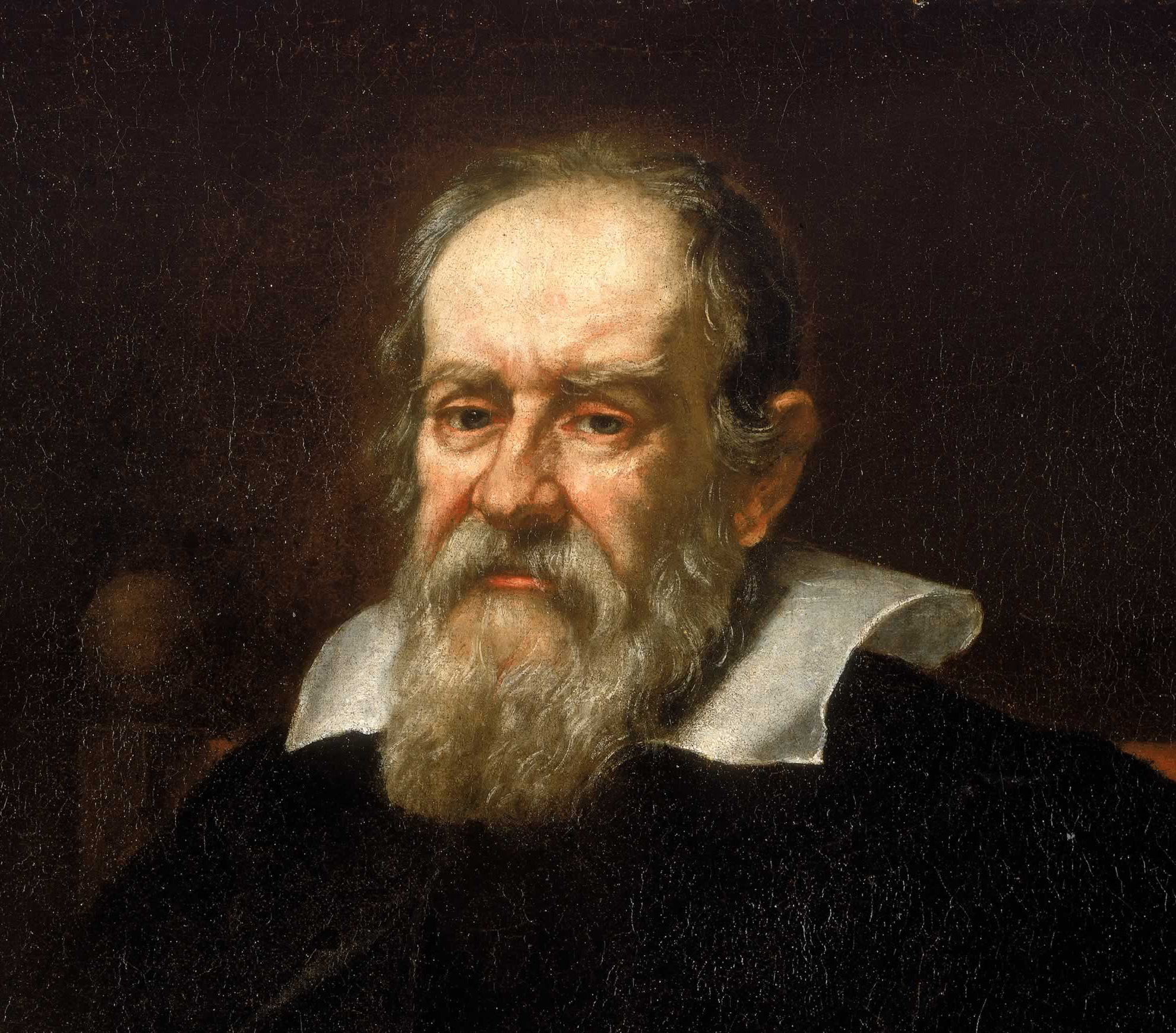
Here Comes Galileo (Again!?)
I have a lot of respect for Selmys. C. S. Lewis said once
that he didn’t talk about homosexuality as a rule because it wasn’t a problem
in his life; he wouldn’t tell someone how to fight a battle he’d never fought.
Likewise, never having thought of myself as anything but a male, I’m in no
position to tell people with gender-identity disorder how to overcome it, nor
can I fault them if they fail. In fact, as I understand it, GID is an almost
intractable problem; even sexual-reassignment surgery is unreliable as a
palliative. (See my
post in The Impractical Catholic on sex changes.)
As I say, I respect Selmys, and don’t wish to impugn her
fidelity to the Church. However, in defending her second postulate, instead of
stepping through the common arguments in support of Church teaching and calling
them into question, she drags Galileo into the argument to serve once more as
the sine qua non of magisterial
error. Poor, abused Galileo! Never simply allowed to rest vindicated, his shade
must be constantly conjured up to bolster weak arguments: “Well, the Church has
been wrong before. Just look at Galileo!”
Why, O why does Selmys, who is capable of so much better,
reach for such a hackneyed and intellectually lazy comparison? Well, because
apparently the Church hasn’t formally instituted the “binary model” as dogma:
How does this relate to the transgender question? Well, today we know that various bodies with lower levels of authority (lower, in many cases than the Inquisition of 1616) have condemned transgender identities. We know that Popes have offered indirect criticism (though Christmas greetings and Papal homilies are not official dogmatic pronouncements any more than airplane interviews are.) We know that the weight of theological tradition falls on the side of a strict male-female binary, and we know that Genesis 1:27 and Matthew 19:4 are traditionally interpreted as excluding legitimate variation from this scheme.
We also know that nothing about transgender or intersex conditions has been promulgated at a level of authority that meets Vatican I’s criteria for infallibility. This means that there remains open the possibility of developments in doctrine that will reveal a space within the order of creation for those who do not fit neatly into binary categories [bold type mine.—ASL]. The basic teaching — that we are created male and female in the image and likeness of God — could be compatible with the idea that there is some admixture of both the male and the female in certain individuals (an idea which, in fact, has roots in some ancient Jewish interpretive traditions.)
Put differently, neither the pope nor any Council has said
the magic words “anathema sit”. So,
despite her own admission that “the weight of theological tradition falls on
the side of a strict male-female binary”, Selmys retains hope the Church will
decide “that God has made trans people and intersex people exactly as they are
meant to be, that variations across a spectrum of masculinity and femininity
are part of the diversity of His creative genius.”
“If You Were an Amoeba …”
However, there’s more to the “strict male-female binary”
than the mere weight of tradition. Selmys, like other advocates of the “social
construct” theory, has got into the bad habit of regarding biology as
ancillary, if not irrelevant, to sexuality, placing emphasis rather on
psychological and social characteristics that are secondary and to some
undetermined extent mutable.
As
I’ve said before, the binary model exists because sexual bifurcation makes human reproduction possible. If we’d
evolved to reproduce in any other manner, we wouldn’t have the kinds of sexual
organs we do; we might not even be capable of sexual intercourse in any
meaningful sense of the term. The current technological innovations still rely
on this fact; there are no innovations on the horizon which will make female
impregnation of men possible … or even likely. As the late Robin Williams put
it, “If you were an amoeba, you’d split in two and say, ‘Was it good for me?’”
No one, so far as I know, supposes that people eat only to replenish the calories one
expends in a day, or to restock on vital nutrients. At the same time, no one
(again, so far as I know) who discusses different diets considers the nutritive
function of eating irrelevant to the discussion. As a matter of fact, the
nutritive aspect of eating is routinely granted as of first importance, and
different diets are routinely held up for analysis in its light. Why, then,
would someone think our biological roles in reproduction had no bearing or
great weight in the matter of sexual identity?
Amoebas and Amoebettes
Our emotional and behavioral differences aren’t all either
“nature” or “nurture”; both biology and culture contribute to different
degrees. However, our physical roles in reproduction — whether we individually
choose to reproduce or not, I add, or are capable of it — precede in causality
any “hard-wired” emotional or behavioral differences we have as men and women.
To the degree that such differences are natural rather than taught (i.e.,
“socially constructed”), they have bearing on the way we pair, the way we mate,
and the way we nurture our offspring; they even have some bearing on the grounds
upon which gender roles are socially constructed.
Without the physical facts of maleness and femaleness, there
would be no points of reference, no hooks on which one could hang a “spectrum”
of identities. To speak of men and women in such a case would be as nonsensical
as it is to speak about amoebas and amoebettes. Once we acknowledge
reproduction as the final or necessary cause of sexual bifurcation, however, further
division is stopped in its tracks: there is no need for a “gender continuum”
when only two genders are needed to procreate. Beyond this point lie only
disorder and error, both of which abound in diversity.
A full critique of transgender theory is beyond the scope of
this essay. Suffice it to say that it’s not universally accepted by social
scientists or mental-health professionals, just as the heliocentric theory had
not been proven when Galileo propounded it. Certainly I don’t mean to imply
that human sexuality is not complex. However, any account of human sexuality
that doesn’t accept the causal priority of reproduction is bound to be misleading,
as (oddly enough) the heliocentric model misleads by not representing the motion of the sun
through the galaxy (the planets’ motions are not circular or elliptical but
rather helical). The causal priority of reproduction doesn’t make human
sexuality “frighteningly simple”; rather, it tethers human sexuality to the
real world, to brute physical facts that must be accounted for in any
reasonable explanation.
A World “In a State of Journeying”
In Fundamentals of
Catholic Dogma, Dr. Ludwig Ott states that God wills physical evil for
higher ends, that in the end even moral evil is permitted that He may bring
good out of all things for His greater glory (pp. 45-46). Says the Catechism of the Catholic Church:
With infinite power God could always create something better [cf. St. Thomas Aquinas, Summa Theologiae I:25:6]. But with infinite wisdom and goodness God freely willed to create a world “in a state of journeying” towards its ultimate perfection. In God’s plan this process of becoming involves the appearance of certain beings and the disappearance of others, the existence of the more perfect alongside the less perfect, both constructive and destructive forces of nature. With physical good there exists also physical evil as long as creation has not reached perfection. (CCC 310)
It’s no contradiction, then, to say both that X is disordered and that its existence
as such is no mistake on God’s part. God allows us to err, but also gives us the
faculties and ability to recognize error, and to avoid or correct it. God
permits cancer and spina bifida to exist; it doesn’t follow, however, that we
must celebrate them as examples of the diversity of God’s creation, let alone leave
them uncured and incurable.
As I said at the beginning, never having questioned my own
maleness, I can’t tell people how to deal with gender-identity disorder. And I
can certainly sympathize with the desire to avoid the stigma that is often
wrongly attached to having a mental or emotional disorder. However, it is a disorder, one that springs from our
fallen nature, as Selmys first surmised. Differences aren’t good merely by
being different; our imperfections, faults, and failings are as diverse as we
are.
As for Galileo: let’s give the poor guy a rest.

